


២៩ មិថុនា ២០២២ / 29 June 2022 - What is protecting Khmer and Lao peoples from Covid-19? (*)
តើមានអ្វី ការពារជនជាតិខ្មែរ និងជនជាតិឡាវ ពីជំងឺកូវីដ-១៩?
ក្នុងតំបន់អាស៊ីភាគអាគ្នេយ៍ ប្រទេសឡាវ និងប្រទេសកម្ពុជា មានចំនួនអ្នកស្លាប់ ដោយសារជំងឺកូវីដ-១៩ តិចជាងគេបង្អស់។
មូលហេតុ នៃភាពរឹងមាំ ចំពោះជំងឺកូវីដ-១៩ នេះ គឺកត្តាធម្មជាតិ ទាក់ទងទៅនឹងប្រភេទឈាមពិសេស ដែលជនជាតិខ្មែរ និងជនជាតិឡាវ មានក្នុងខ្លួន តាំងពីកំណើត។
ដូចអ្វីដែលលោក សម រង្ស៊ី បានលើកឡើងមុនគេបង្អស់ ប្រភេទឈាមពិសេសនេះ គឺសារជាតិ Hémoglobine E (HbE) នៅក្នុងគ្រាប់ឈាមក្រហម។ អ្នកដែលមានសារជាតិ HbE ក្នុងឈាម ច្រើនជាងគេ គឺជនជាតិខ្មែរ និងជនជាតិឡាវ ដែលភាគច្រើន ជាអ្នកបន្តពូជ ពីខ្មែរអង្គរ។ នៅប្រទេសថៃ ប្រទេសភូមា និងប្រទេសវៀតណាម ក៏មានពលរដ្ឋ ដែលជាអ្នកបន្តពូជពីខ្មែរអង្គរដែរ ហើយដែលមានសារជាតិ HbE នេះ ក្នុងឈាមដែរ តែមនុស្សប្រភេទនេះ មានចំនួនតិចជាង នៅប្រទេសកម្ពុជា និងនៅប្រទេសឡាវ ។ សូមកុំភ្លេចថា មានជនជាតិខ្មែរកម្ពុជាក្រោម នៅប្រទេសវៀតណាមសព្វថ្ងៃ ជនជាតិខ្មែរសុរិន្ទ នៅប្រទេសថៃសព្វថ្ងៃ និងជនជាតិខ្មែរមន នៅប្រទេសភូមាសព្វថ្ងៃ។ ជនជាតិខ្មែរទាំងអស់នេះ ក៏ជាអ្នកបន្តពូជ ពីខ្មែរអង្គរដែរ។
គេបានកត់សម្គាល់ថា ប្រទេសនៅតំបន់អាស៊ីភាគអាគ្នេយ៍ មានអ្នកស្លាប់ដោយសារជំងឺកូវីដ-១៩ តិចជាងប្រទេសដទៃទៀត ឆ្ងាយណាស់ តាំងពីមិនទាន់មានវ៉ាក់សាំង ការពារពីជំងឺកូវីដ-១៩ ម្ល៉េះ។
តែប្រទេសដែលមានអ្នកស្លាប់តិចជាងគេបង្អស់ ដោយសារជំងឺកូវីដ-១៩ ក្នុងពិភពលោក គឺប្រទេសមួយចំនួន នៅទ្វីបអាហ្វ្រិក តាំងពីមិនទាន់មានវ៉ាក់សាំង ការពារពីជំងឺកូវីដ-១៩ ម្ល៉េះ រហូតមកដល់ពេលនេះ។ ភាពរឹងមាំ ចំពោះជំងឺកូវីដ-១៩ នេះ នៅទ្វីបអាហ្វ្រិក គឺបណ្តាលមកពីកត្តាធម្មជាតិម្យ៉ាងទៀត ទាក់ទងទៅនឹងភាពស៊ាំ ចំពោះជំងឺគ្រុនចាញ់។
កត្តាធម្មជាតិដ៏សំខាន់បំផុត ដែលផ្តល់ភាពរឹងមាំ ចំពោះជំងឺកូវីដ-១៩ ត្រូវបានលោក សម រង្ស៊ី រៀបរាប់មុនគេបង្អស់ ដូចបានបញ្ជាក់ យ៉ាងសង្ខេប ក្នុងអត្ថបទនេះ
https://thegeopolitics.com/role-of-genetic-factors-in.../
នៅប្រទេសកម្ពុជា មានបុគ្គលល្ងង់ខ្លៅ និងអវិជ្ជាម្នាក់ ដែលប្រជាពលរដ្ឋបានដាក់ឈ្មោះថា អា "៣១ កុម្ភៈ" ដែលនិយាយអត់ដឹងក្តីអ្វីទេ ពីជំងឺកូវីដ-១៩ នេះ។
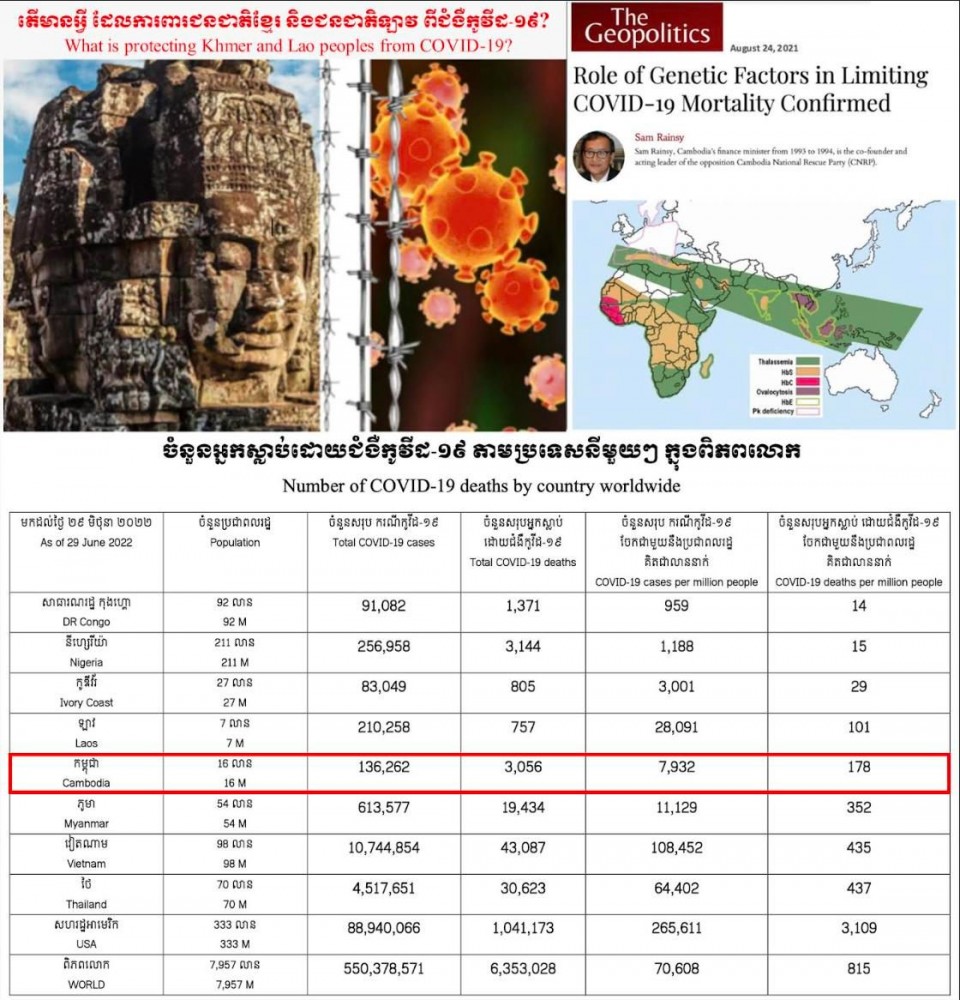
"Role of Genetic Factors in Limiting Covid-19 Mortality Confirmed"
https://thegeopolitics.com/role-of-genetic-factors-in.../...
Latest news / ដំណឹងចុងក្រោយបង្អស់
- A Southeast Asian Perspective on the COVID-19 Pandemic: Hemoglobin E (HbE)-Trait Confers Resistance Against COVID-19.
"Intriguing epidemiological observations suggest, and biological evidence supports, an inverse correlation between increasing HbE/thalassemia trait prevalence rates and decreased susceptibility to, and fatality from, COVID-19 infections. Local COVID-19 infections within Thailand vary 6-fold between the northeast (2.84% of total cases) versus the south (19%), in tandem with regional variations in HbE gene frequency (70% in the northeast compared to 12% in the south). Similarly, Malaysia, which borders southern Thailand, has an HbE trait frequency of only 3.8% but reports substantially higher COVID19 infections compared to Thailand. Interestingly, in Cambodia and Laos (where very few COVID-19 deaths are reported), thalassemia mutation rates are similar to Thailand; for Cambodia, the thalassemia prevalence is 62.7% (HbE being the most prevalent, at 56%). In Myanmar (HbE carrier rates vary between 1.9 and 42% depending on ethnic group and geography), low infection and death rates are also seen. Vietnam and the neighboring Chinese province of Yunnan both report low COVID-19 infection rates, with locally high prevalence of HbE trait in line with other mainland SE Asian nations. In Vietnam, the Mon-Khmer-speaking ethnic groups are genetically closer to the Thai-Lao-Cambodian border populations and report HbE gene prevalence up to 36%."
https://www.ncbi.nlm.nih.gov/pmc/articles/PMC7796072/
- In Bangladesh, thalassemia traits, and particularly Hemoglobin E (HbE), is protective against COVID-19 infection in similar ways to the numerous thalassemia traits conferring protection against malaria and the dengue virus.
https://www.cell.com/heliyon/pdf/S2405-8440(21)02332-X.pdf
- Comparison between Epidemiological Data for COVID-19 and Thalassemia in Indonesia.
"Indonesia is located in the ‘thalassemia belt’, with a high prevalence of thalassemia beta HbE. The prevalence of HBe thalassemia has been estimated to be around 1.5–3.6%.
In provinces with a high prevalence of thalassemia, such as Aceh (0.012%), the incidence of COVID-19 in the province was only 0.3%. This contrasts with other province with low prevalence of thalassemia, such as East Borneo (0.004%), which has an incidence of COVID-19 six-fold greater than that of Aceh’s (1.8%). From these data, it seems probable that thalassemia (especially HbE) might provide additional protection against SARS-CoV2 infection."
https://www.mdpi.com/2038-8330/14/1/2/htm
- Thalassemia (especially HbE) is paradoxically associated with a reduced risk of in‐hospital complications and mortality in COVID‐19: Data from an international registry
https://www.researchgate.net/.../359619646_Thalassaemia...
- COVID-19: beta-thalassemia subjects immunised?
 Khmer
Khmer English
 French


